

Product Center

Product Description
Application Scenarios
Surface water, groundwater, and source water quality monitoring; industrial wastewater, municipal sewage, tap water from the plant outlet, pipeline network water, and secondary water supply monitoring.
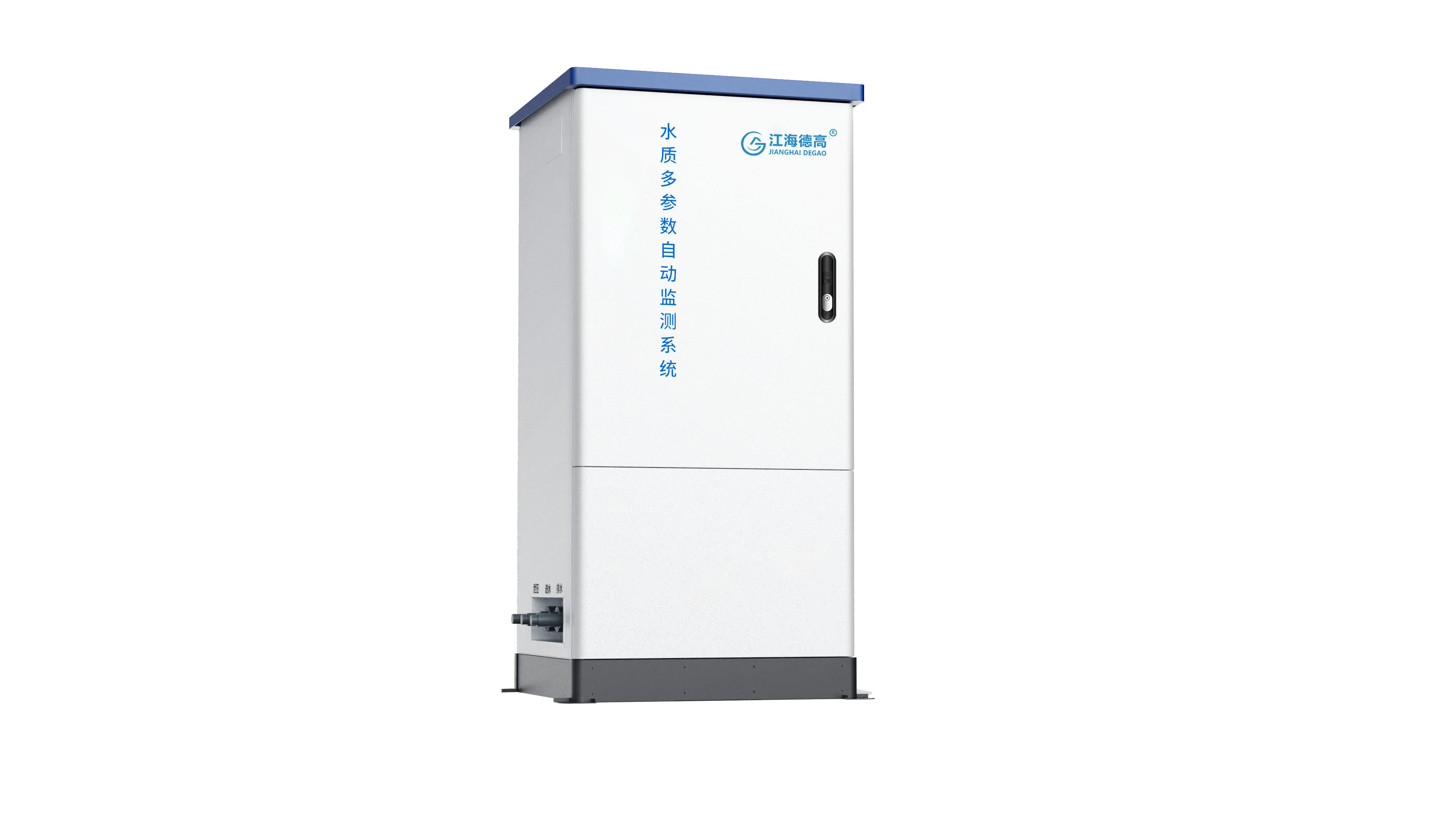
Product Features
Parameter-based personalized customization allows for flexible combination, selection, and tailoring of relevant monitoring parameters according to customers' specific monitoring needs.
By flexibly configuring the intelligent instrument platform software and combining parameter analysis modules, intelligent online monitoring applications can be realized.
Integrated system for引流 integration and a series-connected circulation device, enabling multiple real-time data analyses with just a small number of water samples.
Featuring automatic online sensors and pipeline maintenance, it requires minimal manual intervention, creating an ideal operational environment for parameter measurement. This approach integrates and simplifies the handling of complex field challenges, eliminating uncertainties in the application process.
Built-in pressure-reducing device and constant-flow technology ensure stable flow rates and reliable analytical data, unaffected by fluctuations in pipeline pressure.
Automatic排污 function (automatically opens the排污 valve at scheduled times):
Equipped with liquid level monitoring and featuring low-liquid alarm functionality, it can promptly detect faults such as water outages.
Product Principle
Ammonia Nitrogen Automatic Water Quality Analyzer
Under the presence of sodium nitroprusside, ammonium reacts with salicylate and hypochlorite ions to form a blue compound. The concentration of ammonia nitrogen in the water sample is then determined using spectrophotometry, with the measured value displayed on an LCD screen.
High-Manganese Salt Index Water Quality Automatic Analyzer
Add a known amount of potassium permanganate and sulfuric acid to the water sample, then perform constant-temperature digestion at 93°C to 95°C. Potassium permanganate will oxidize certain organic and inorganic substances that are readily oxidizable in the water sample. Finally, use spectrophotometry to measure the remaining potassium permanganate, and calculate the permanganate index of the water sample based on the amount of potassium permanganate consumed.
Total Phosphorus Water Quality Automatic Analyzer
Under neutral conditions, the sample is digested using potassium persulfate (or nitric acid-perchloric acid) to oxidize all phosphorus present into orthophosphate. In an acidic medium, orthophosphate reacts with molybdate to form phosphomolybdic acid in the presence of antimony salts. This complex is then immediately reduced by ascorbic acid, resulting in the formation of a blue-colored complex. The absorbance of this blue complex is measured at 700 nm, allowing for the determination of the total phosphorus content in the water sample.
Total Nitrogen Water Quality Automatic Analyzer
Potassium persulfate is used as an oxidizing agent, and the sample is digested at 125°C for 15–30 minutes, converting nitrogen compounds into nitrate ions. In a strongly acidic environment, a color-developing reagent reacts with the nitrate ions to produce a colored complex. The concentration of nitrate is then determined by spectrophotometry at the characteristic absorption wavelength.
Multi-parameter Water Quality Automatic Analyzer
PH: Hydrogen ions selectively permeate through the outer membrane of the working electrode, generating an electrochemical potential. This generated potential depends on the pH of the medium. The electrode incorporates Ag/AgCl as a reference electrode, which maintains a stable potential unaffected by the acidity or alkalinity of the medium. The transmitter operates based on the Nernst equation.
(Nernst) Converts the potential difference between the working electrode and the reference electrode into the corresponding pH value.
Electrical conductivity: Place two coaxially arranged electrodes into the sample solution, apply a voltage between the electrodes, and measure the resulting current. Using Ohm's law, calculate either the conductance value G or the resistance value R. Finally, determine the conductivity by multiplying R (or dividing G) by the electrode constant K, which is specific to the electrode configuration.
Turbidity: Suspended particles scatter incident light in various directions, with 90° scattered light being less affected by particle size. This type of scattered light is commonly used for turbidity measurement. A light source emits light, and the intensity of the scattered light at a 90° angle is detected. The transmitter then calculates the turbidity based on the measured scattered light intensity.
Residual Chlorine: The constant-voltage residual chlorine electrode consists of two platinum electrodes and a reference electrode, forming a micro-battery measurement system. During measurement, a stable potential is maintained at the electrode sensing end. Different target components under this potential generate distinct current intensities with excellent linearity. The transmitter then converts the measured current value into a residual chlorine reading.
COD Water Quality Automatic Analyzer
The mixture of water sample, potassium dichromate digestion solution, and mercuric sulfate (which eliminates interference from chloride ions in the water sample, as chloride ions can form highly stable mercury chloride with mercury ions)—along with silver sulfate solution (added as a catalyst to more effectively oxidize straight-chain organic compounds)—is heated to 165°C. After the dichromate ions oxidize the organic matter in the solution, the color changes. The analyzer detects this color change and converts it into a COD value for output. The amount of dichromate ions consumed directly corresponds to the quantity of oxidizable organic matter present.


Jiangsu Degao Internet of Things Technology Co., Ltd.
Consulting
+86 15996603530
degao@163.com
Address
No. 158, Xinsheng Road, Nantong, Jiangsu, Maipu Technology Park
Subscription Number
Service Number
Mobile phone QR code
Copyright © 2025 Jiangsu Degao Internet of Things Technology Co., Ltd.
Website Construction:Zhongqi PowerNantong|Tag|City Substation